14 Angular Men Fringe Haircuts for Sharp Stylish Looks 2026
A great fringe can change your whole face, but the wrong one just sits there. Angular fringe haircuts solve that by cutting the front at sharp, deliberate angles that add structure and edge to any head of hair. Whether you want something office-safe or full-on bold, these fourteen angular men fringe haircuts cover every variation — side-swept, textured, spiky, and faded. Each one includes exactly what to tell your barber, which styling product makes it work, and how often you will need a trim to keep the angles crisp and clean.
1. Side-Swept Angular Fringe
The side-swept angular fringe keeps length on top — about three to four inches — cut so the front drops diagonally across the forehead toward one side. The sides are scissor-tapered to blend, never buzzed to skin, which keeps the look soft enough for professional settings. Style it by blow-drying the fringe in the sweep direction, then pressing a dime-sized amount of matte paste through the ends. Tell your barber you want a diagonal, graduated fringe with natural flow.
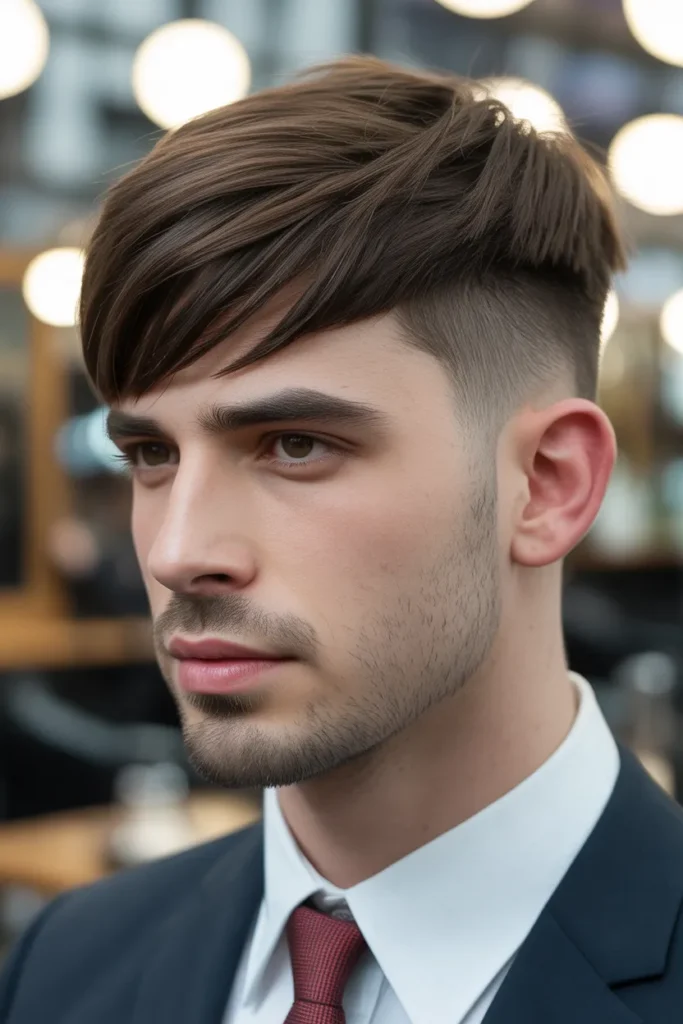
2. Textured Angular Fringe
Texture is what separates a flat fringe from a modern one, and this cut builds it in with point cutting — the barber snips into the ends vertically so the fringe falls in separated, piecey strands. It suits straight to wavy hair and hides a high hairline without looking like a cover-up. Work a pea-sized amount of texture clay through dry hair, pulling strands forward and apart. Ask for heavy texture through the top with the fringe left long enough to reach the eyebrows.
Quick Win: Point-cut ends frizz on their own — a drop of argan oil smoothed over the fringe keeps the texture separated, not flyaway.
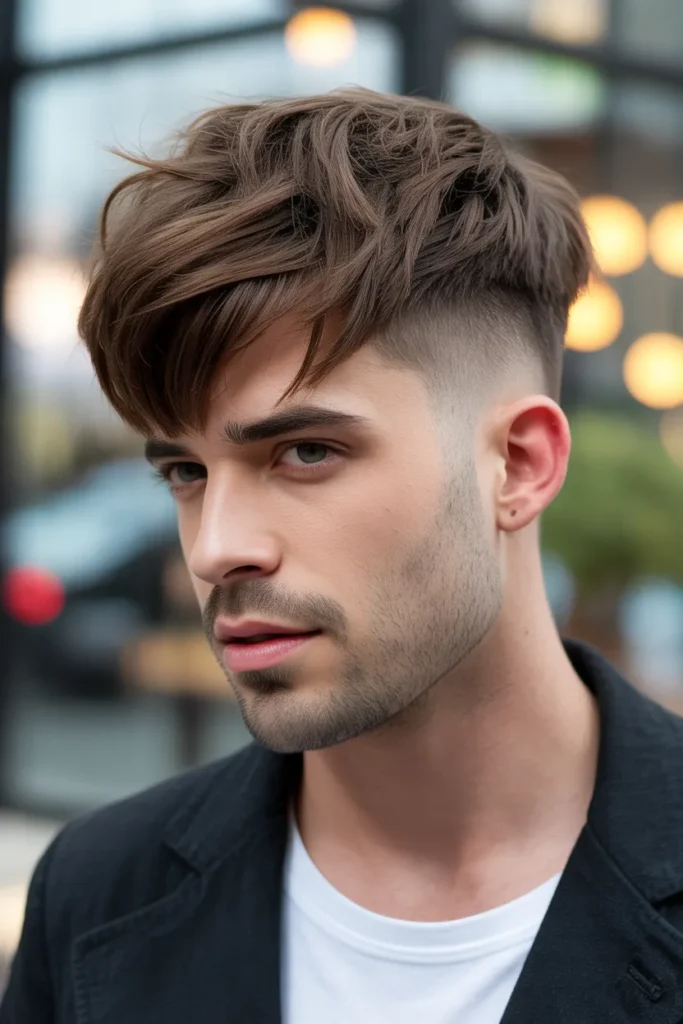
3. Short Angular Fringe
The short angular fringe keeps the front to about two inches, cut straight across but with one side angled shorter — a crisp, graphic line that suits strong jawlines. The sides get a mid fade, which sharpens the contrast between the structured top and the clean sides. This is a low-effort style: towel-dry, push the fringe forward with your fingers, and add a touch of styling cream. Book a trim every three weeks to keep the line exact.
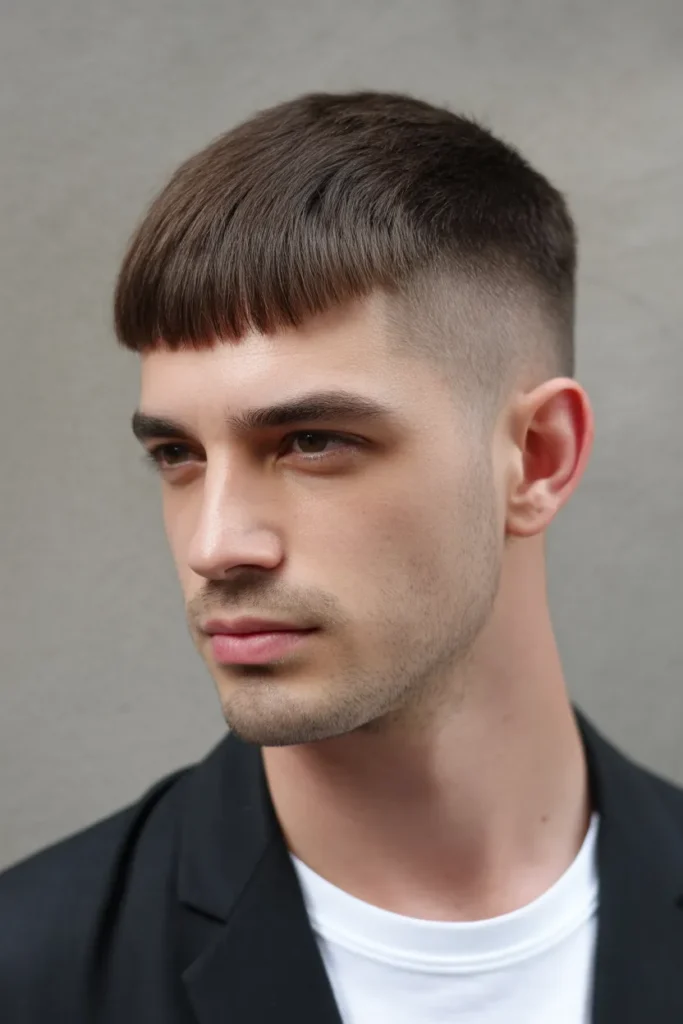
4. Tapered Angular Fringe
A tapered angular fringe pairs a longer, angled front with sides that gradually shorten from the temples down — no harsh fade line, just a smooth gradient. The taper gives the cut a refined, grown-man feel that works in conservative offices while the angled fringe keeps it current. Style with a light pomade for a controlled finish, combing the fringe forward at a slight diagonal. Ask your barber for a natural taper and an asymmetric fringe line.
Quick Win: Sleep on it and skip the morning wash — second-day hair holds an angled fringe better than freshly washed hair ever will.
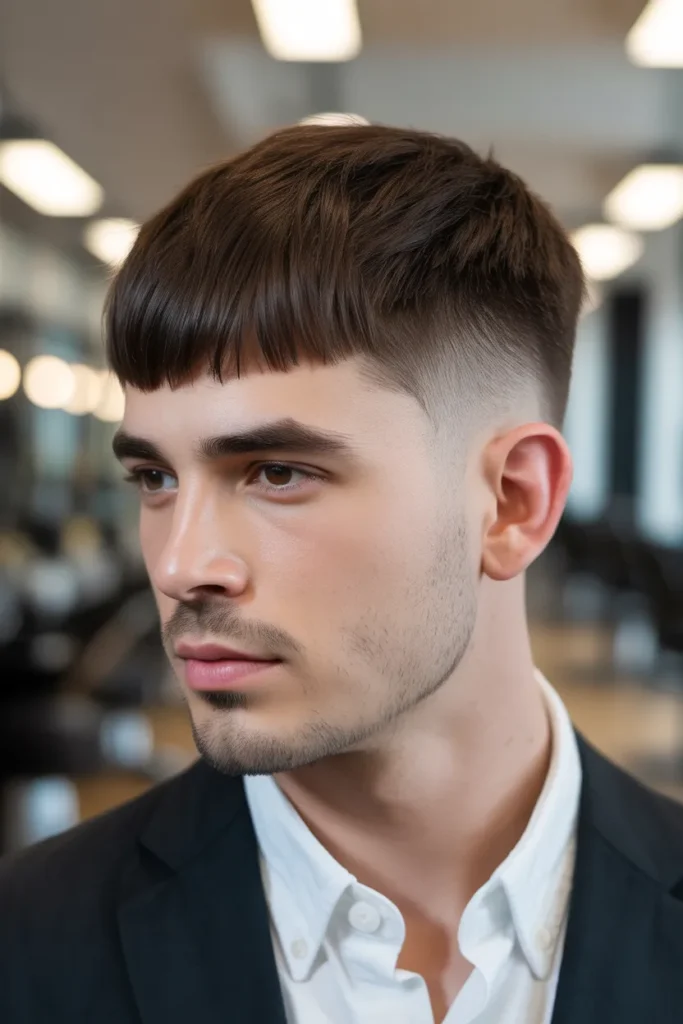
5. Layered Angular Fringe
Layered fringe adds internal layers through the top so thick hair does not puff up into a helmet. The barber cuts the top into disconnected layers, then shapes the front into an angled fringe that sits lighter on the forehead. This is the fix for men with dense, coarse hair who want fringe without the bulk. Blow-dry the fringe down and forward with a vent brush, then finish with matte clay. Maintenance trims every four to five weeks keep the layers from collapsing.
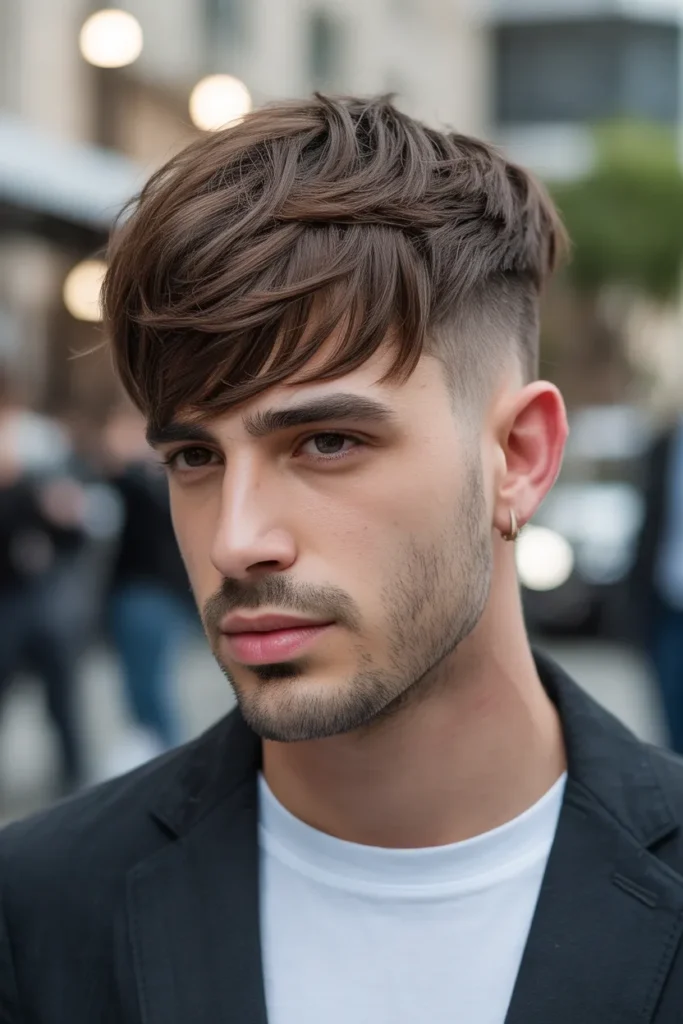
6. Short Textured Fringe
The short textured fringe is the cropped, easy version of this trend: two to three inches on top, heavily textured, fringe pushed forward with a jagged edge. Sides are faded low to keep attention on the top. It flatters rounder faces because the forward texture adds height without width. Styling takes ninety seconds — work sea-salt spray into damp hair, scrunch forward, and let it air-dry. Tell your barber you want a textured crop with a forward, broken fringe line.
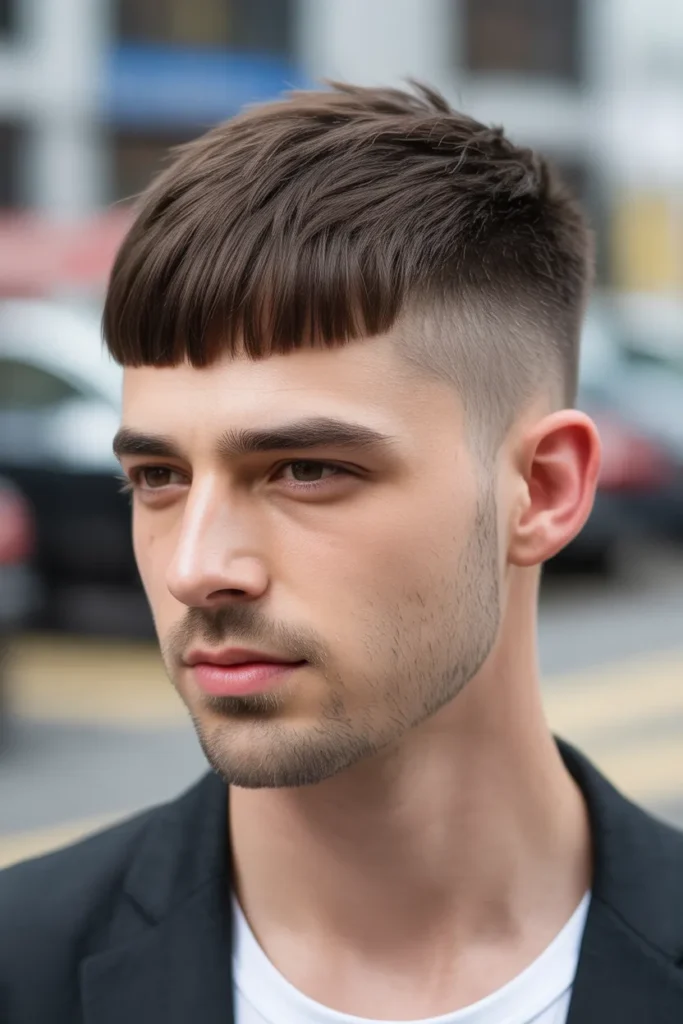
7. Spiky Angular Fringe
Spiky fringe takes the angular cut and pushes it upright: the front is cut longer, then styled into defined spikes that lean forward at an angle. A strong-hold wax or fiber is essential — warm it between your palms and twist small sections upward. The sides stay tight with a high fade so the spikes are the whole statement. This is a night-out haircut, not a boardroom one, and it needs restyling daily. Ask for length on top with a disconnected undercut.
Quick Win: Apply wax to completely dry hair only — damp hair makes spikes clump and collapse within an hour.
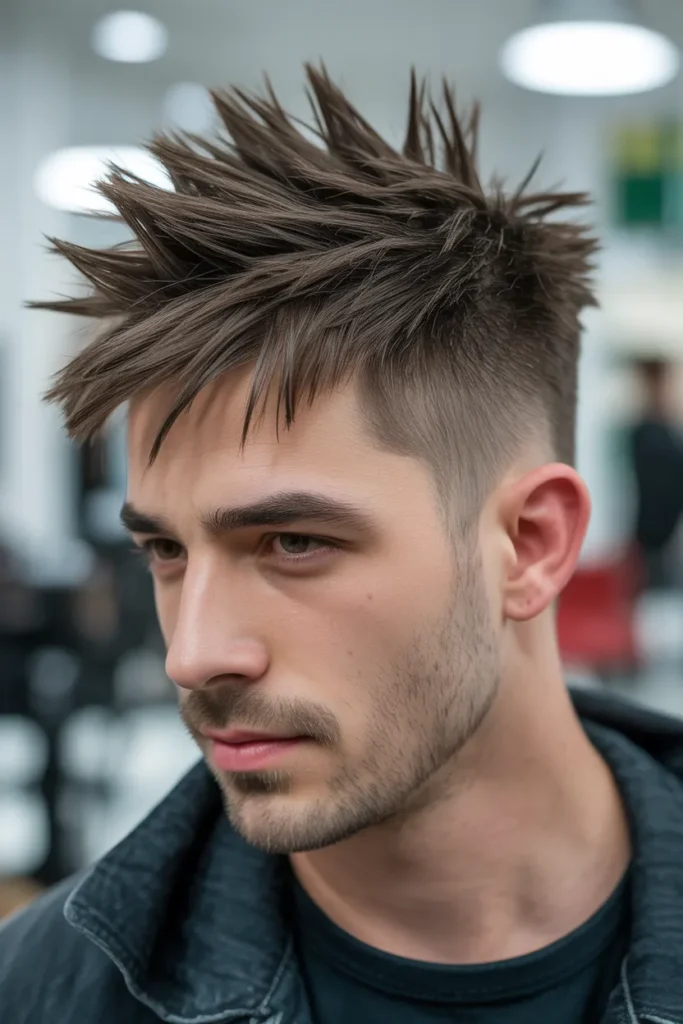
8. Layered Side Fringe
The layered side fringe sweeps a longer, layered front across the forehead at a deep angle, creating diagonal lines that slim and lengthen the face. The layers through the crown add movement so the sweep never looks plastered. Blow-dry with a side part, directing the fringe across with a paddle brush, then lock it with a light-hold spray. Tell your barber the fringe should reach past the eyebrows on the long side so the angle reads clearly.
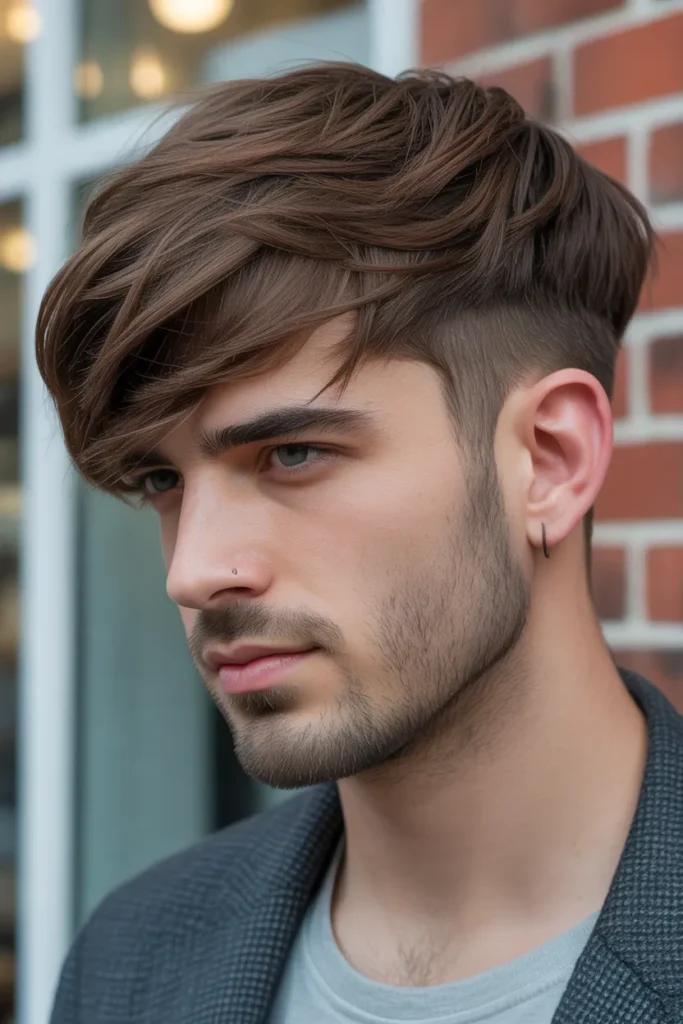
9. Angular Fringe with Fade
This is the boldest pairing in the list: a sharp, angled fringe up top with a skin fade on the sides and back. The fade starts high and tight, creating maximum contrast that makes the fringe’s angles look even more deliberate. It suits men who like high-contrast, barbershop-precise cuts and do not mind visiting every two to three weeks. Style the fringe forward with matte clay. Ask for a high skin fade with a textured, angular fringe left long on top.
Quick Win: The fade grows out fastest — book the fade touch-up at two weeks even if the top still looks fine.
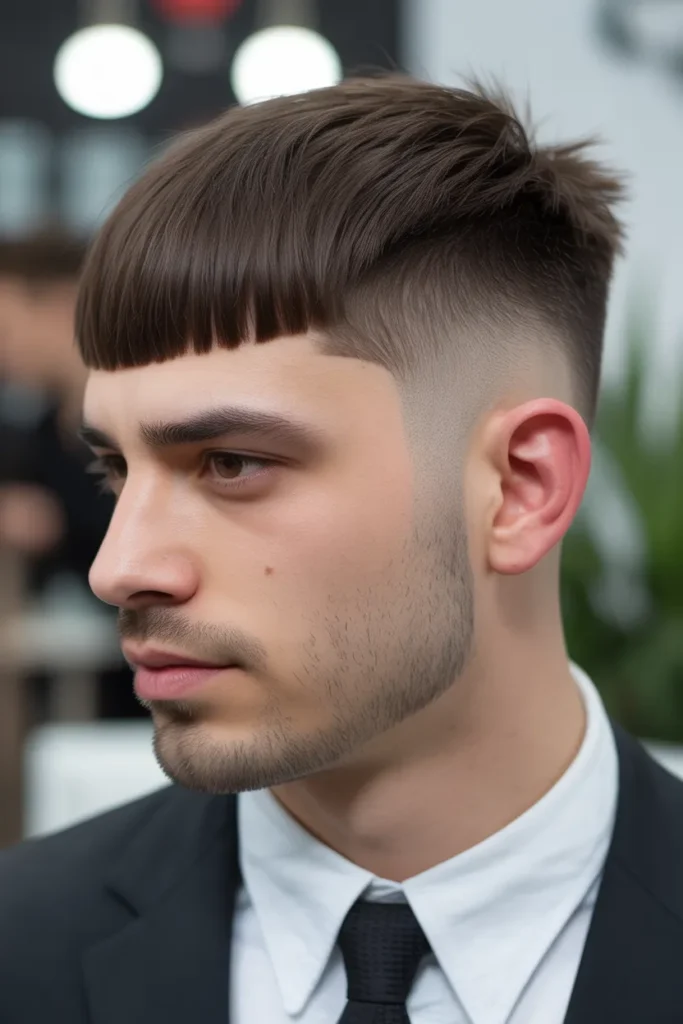
10. Textured Side-Swept Fringe
Combining texture with a side sweep gives you a fringe that moves: point-cut ends swept diagonally so the pieces separate and catch light. It works beautifully on wavy hair, where the natural bend does half the styling for you. Towel-dry, apply a small amount of cream, and push the fringe to one side with your fingers. Ask your barber for a textured top with a directional fringe — longer on the sweep side, shorter where it starts.
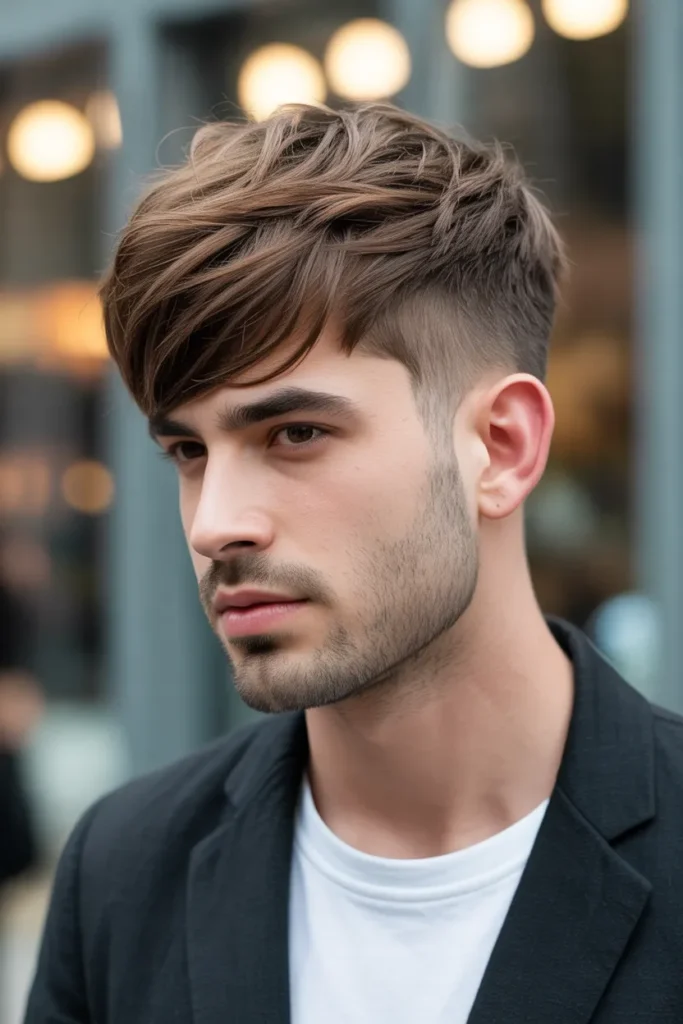
11. Short Spiky Fringe
The short spiky fringe keeps everything under two inches and spikes it forward — a low-maintenance, high-energy cut that suits active lifestyles. The barber textures the top aggressively so the spikes form naturally, then the sides get a tight taper. Styling is a thirty-second job: a fingertip of strong paste, pushed forward and pinched into points. It grows out gracefully, so you can stretch trims to five weeks without it looking messy.
Quick Win: Less product is more — a pea-sized amount pinched through dry spikes beats a handful that turns them greasy.
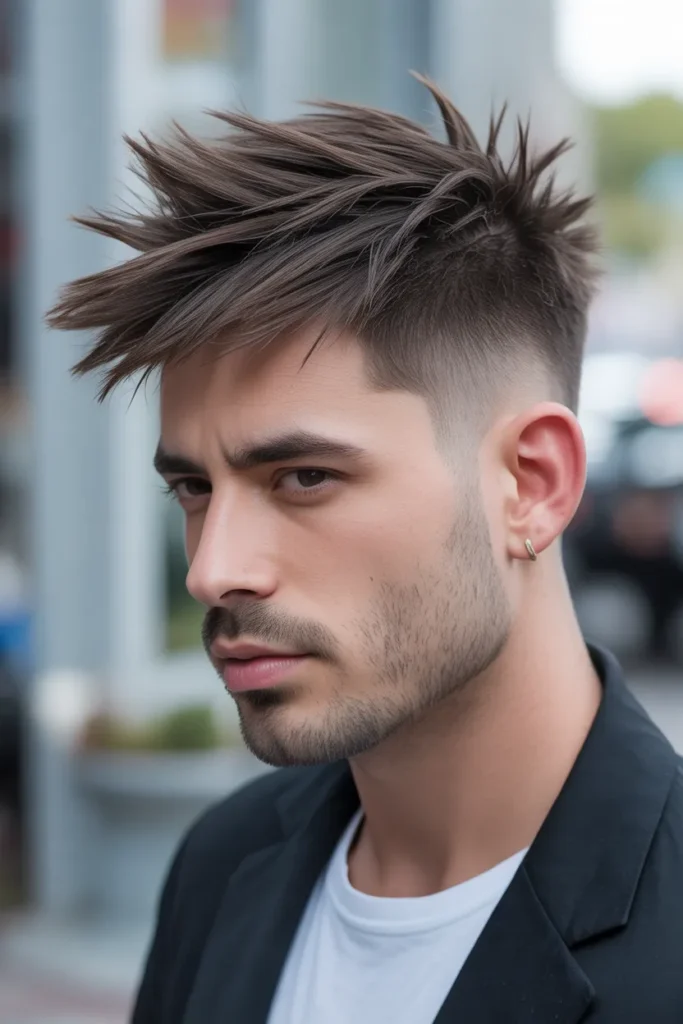
12. Angled Crop Fringe
The angled crop is a French crop with attitude: the fringe is cut in a straight line but tilted, so one corner sits noticeably lower than the other. The top stays short and uniform with micro-texture, and the sides are faded to the skin. It suits men with straight hair and defined features, since the geometric line draws attention to the brow and eyes. Tell your barber you want a tilted crop fringe with a clean, sharp perimeter.
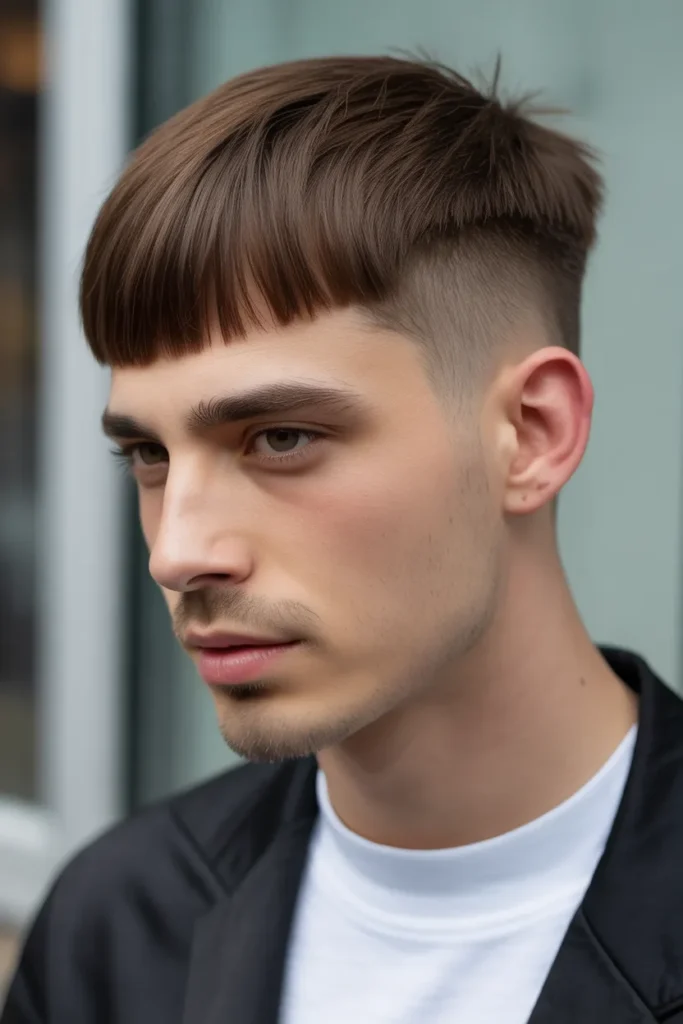
13. Forward-Swept Angular Fringe
The forward-swept fringe pushes everything straight toward the forehead at a slight angle, cut with a jagged, feathered edge so it never looks like a bowl cut. The sides are scissored short to match the softness of the top. This is the most forgiving style here — it suits most face shapes and grows out well. Blow-dry forward with your fingers, then finish with a light cream. Ask for a forward fringe with a broken, textured edge.
Quick Win: Blow-dry the fringe in the opposite direction first, then sweep it forward — the tension adds volume at the roots.
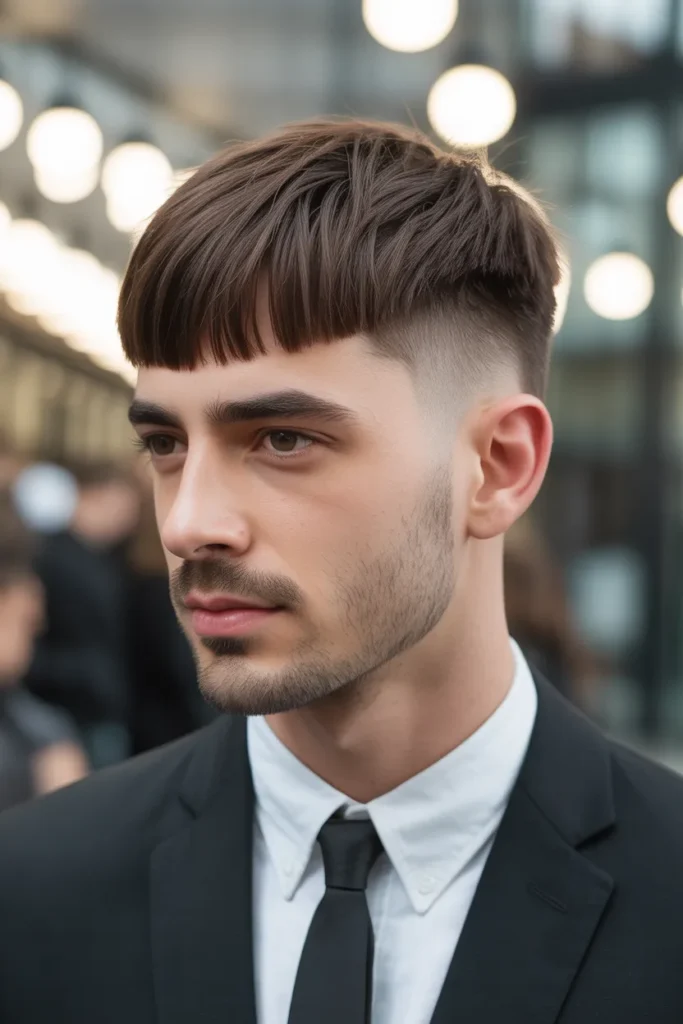
14. Short Layered Fringe
The short layered fringe stacks subtle layers through a compact top, then angles the front for definition without length. It is ideal for men who want the angular look but keep their hair short for work or sport. The layers do the work — they create separation that reads as texture even with zero product. If you do style it, a touch of matte paste is plenty. Tell your barber you want short, stacked layers with an angled fringe line.
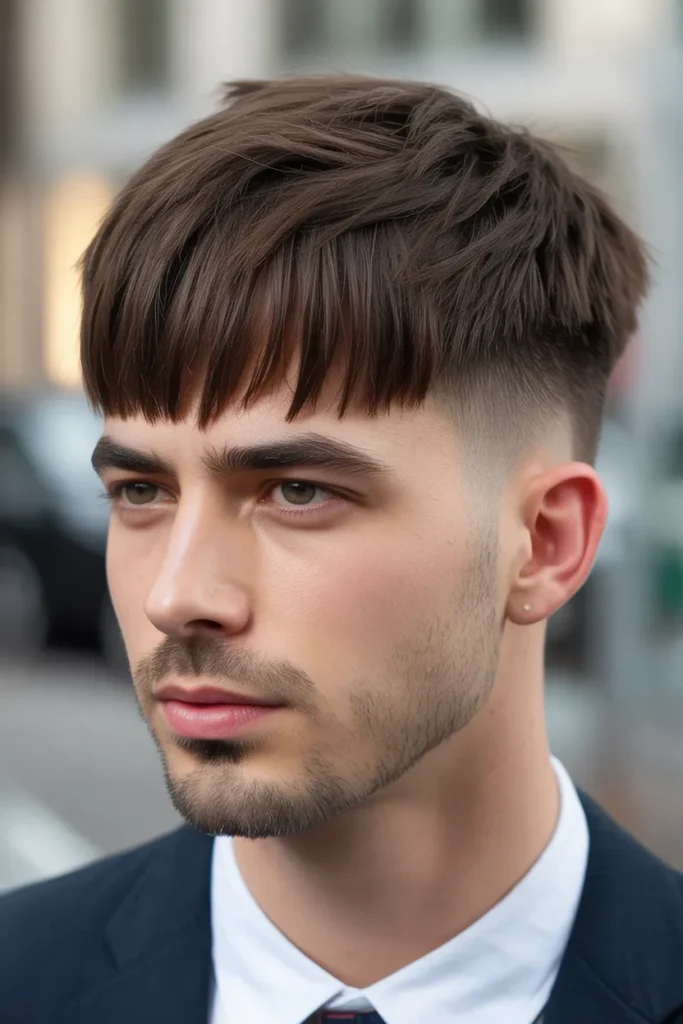
Pick Your Angle and Commit
Angular fringe haircuts work because the angles do the styling for you — they give structure to fine hair, edge to thick hair, and definition to every face. The only real decision is how bold to go: tapered and side-swept for the office, spiky and faded for the weekend. Take one of these photos to your barber, ask for the cut by name, and give it two weeks — once the fringe settles, you will wonder why you waited.
Frequently Asked Questions
What face shape suits an angular fringe?
Angular fringes flatter most face shapes because the diagonal lines break up symmetry. Side-swept versions slim round faces, while shorter, graphic fringes sharpen softer jawlines. If your forehead is very short, ask your barber to keep the fringe lighter so it does not overwhelm your features.
How do I ask my barber for an angular fringe?
Bring a photo and use the terms from this list: mention the fringe direction (side-swept, forward, spiky), the sides (taper, mid fade, skin fade), and the texture level. Photos remove guesswork — barbers cut what they see, not what they hear.
How often should I trim an angular fringe haircut?
Every three to four weeks for most versions, since the angles lose their sharpness as hair grows. Skin-fade pairings need a touch-up every two to three weeks. Between visits, trim only the fringe itself if it starts poking your eyes — never the sides.
What product works best for styling angular fringe?
Matte clay or fiber for textured and spiky versions, light pomade for sleek side-swept styles, and styling cream for soft, natural finishes. Start with a pea-sized amount on dry hair — you can always add more, but too much product kills the texture.
Can men with curly hair get an angular fringe?
Yes, but the cut works with the curl rather than against it. Ask for longer layers on top so the curls fall forward in an angled shape, and keep the sides tapered. Avoid heavy thinning on curly fringe — it creates frizz. A curl cream defines the shape without stiffness.