15 Long Layer Hairstyle Ideas for Effortless Everyday Style
Long hair starts to feel like a burden when it hangs flat, looks heavy, and refuses to hold any style beyond a ponytail. The problem is rarely the length itself — it is the weight sitting in the ends with nothing breaking it up. That is exactly what a long layer hairstyle fixes: strategic cutting removes bulk from the mid-lengths and ends so hair moves, holds shape, and actually responds to styling. Layers also grow out gracefully, which means fewer hours in the salon chair. This guide walks through fifteen layered looks, each explained with what to ask for at your appointment and how to style it at home.
Feathered Long Layers
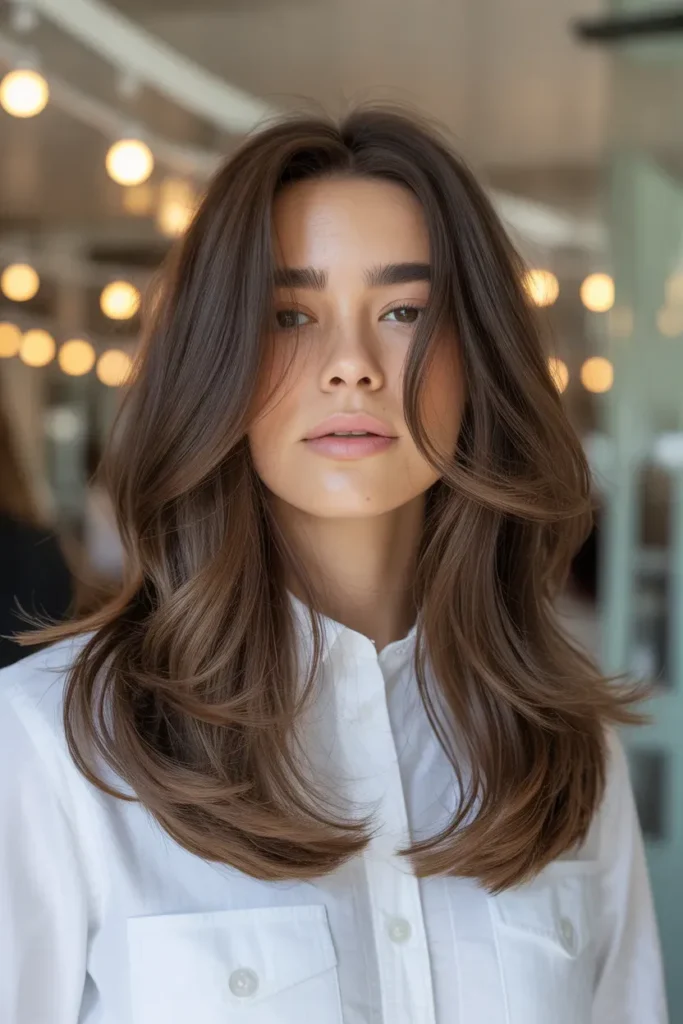
Feathered long layers thin and angle the ends outward, so heavy hair looks lighter and moves with a soft, flicked swing. The technique works best on thick, straight to slightly wavy hair because it removes bulk while keeping fullness around the crown. Ask your stylist for long layers starting below the chin, blended with point cutting for that feathered edge. Style by blow-drying with a round brush and rolling the ends outward, then revive the flick between washes with a flat iron.
Soft Wave Layers
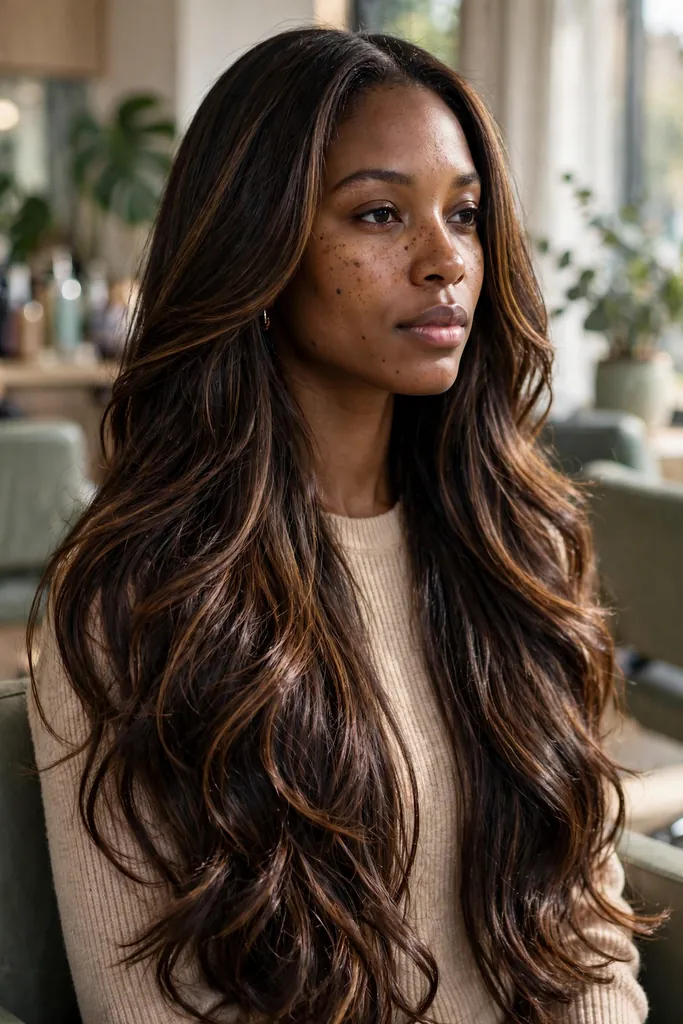
Soft wave layers are cut at different lengths through the mid-lengths and ends, which gives loose waves something to grip and hold. This is the cut for anyone who wants relaxed, slightly undone texture without daily heat styling. It works across fine, medium, and thick hair because the layers add volume where you need it and remove it where you do not. Ask for long soft layers blended through the bottom third of your hair. Scrunch in a salt spray or mousse on damp hair and let it air dry.
Quick Win: Braid damp hair loosely before bed — morning waves need zero heat and still last through the workday.
Face-Framing Layers
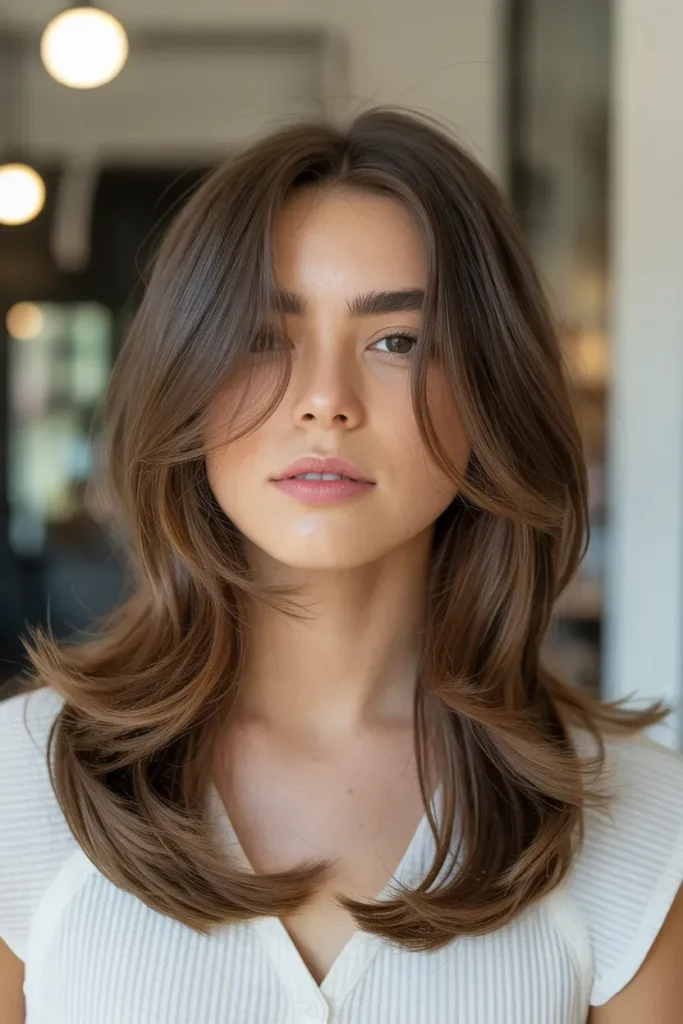
Face-framing layers are shorter pieces cut around the cheekbones and jaw that break up a long, heavy silhouette. They draw attention upward, soften strong features, and make even a basic blowout look intentional. They suit almost every face shape because the starting point can be adjusted — higher for rounder faces, lower for longer ones. Ask your stylist for face-framing pieces that start at the chin and blend into the overall length. A quick bend with a curling wand keeps them looking fresh.
Blunt Ends Layers
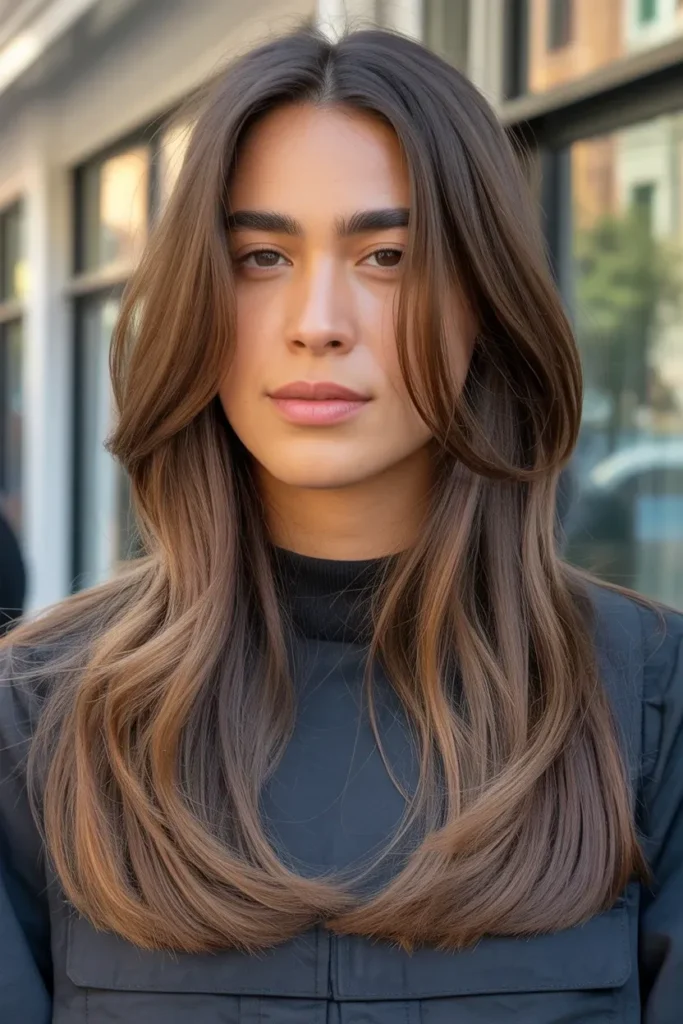
Blunt ends keep the bottom edge of your hair thick and full while hidden layers above add subtle movement. The result looks modern and intentional rather than straggly, which makes it a strong choice for straight hair that tends to look thin at the ends. Ask your stylist to keep the perimeter line solid and cut long internal layers a few inches above the ends. The look holds its shape well between trims, though it needs a refresh every eight to ten weeks to keep that sharp edge.
Curtain Bang Layers
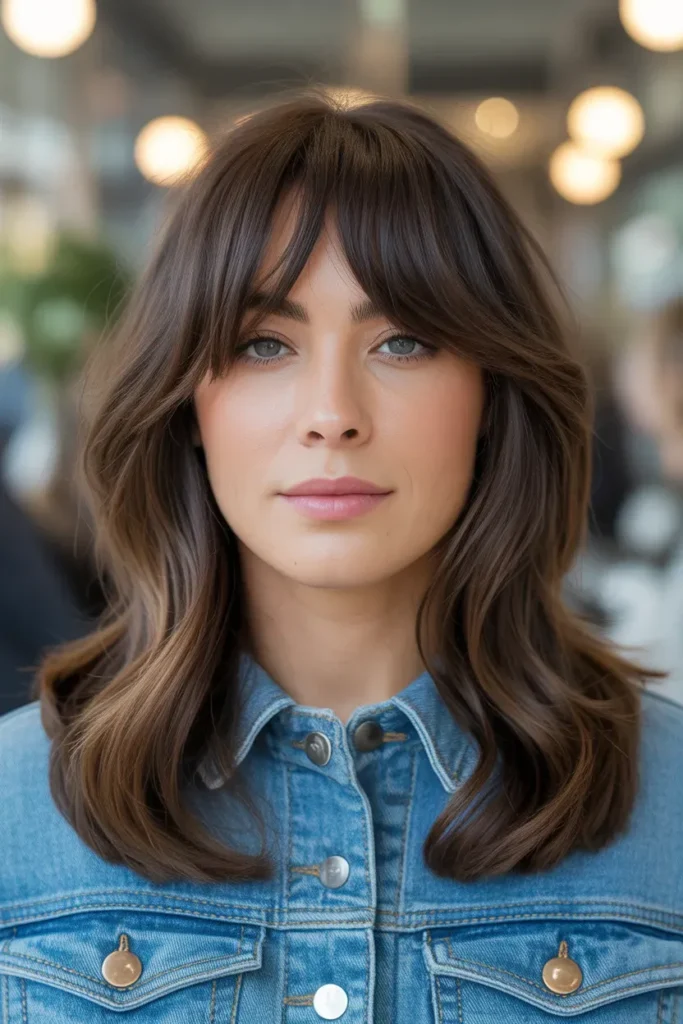
Curtain bangs split down the middle and sweep to each side, blending straight into long layers for a soft, grown-out feel. They add movement around the face without committing to a full fringe, and they grow out into the layers instead of needing constant trims. Ask your stylist for curtain pieces that start at the cheekbones with the shortest point near the nose bridge. Style with a round brush, sweeping each side outward for that signature curve.
Quick Win: Clip each side back with a no-crease clip while it cools — the sweep sets in five minutes and holds all day.
Layered Straight Finish
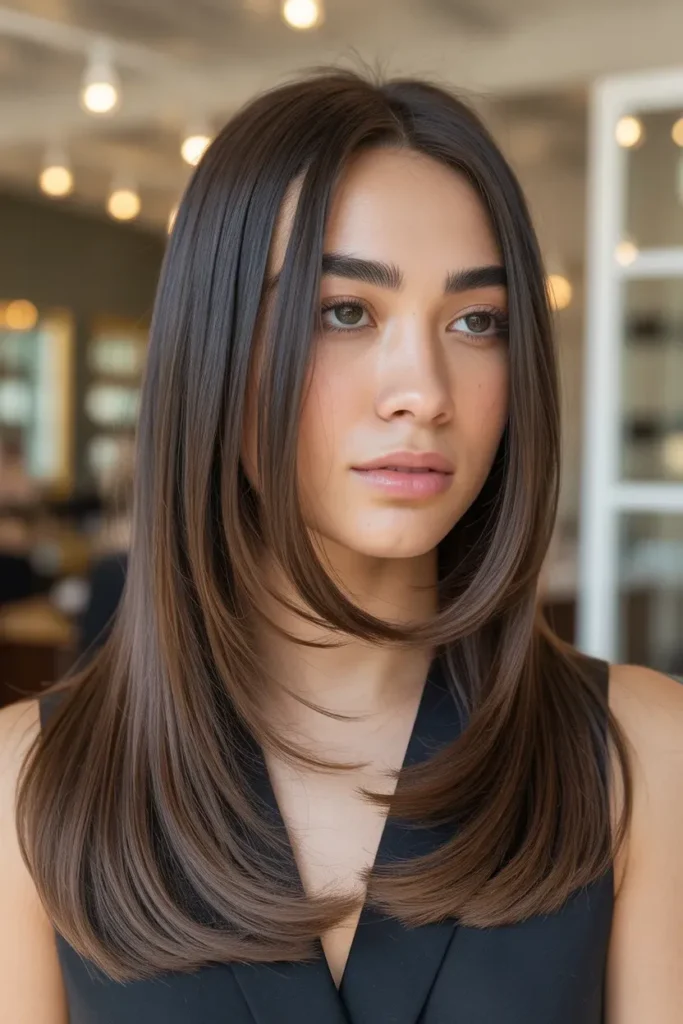
A layered straight finish shows off glossy, glass-like shine because the cut’s clean edges catch the light evenly. It works best on naturally straight or straightened hair, where subtle graduation through the ends keeps long hair from looking like a curtain. Ask your stylist for minimal layering concentrated in the last few inches, finished with a smoothing blowout. Use a heat protectant and a flat iron on medium heat, then seal with a pea-sized drop of shine serum for a polished result.
Textured Beach Layers
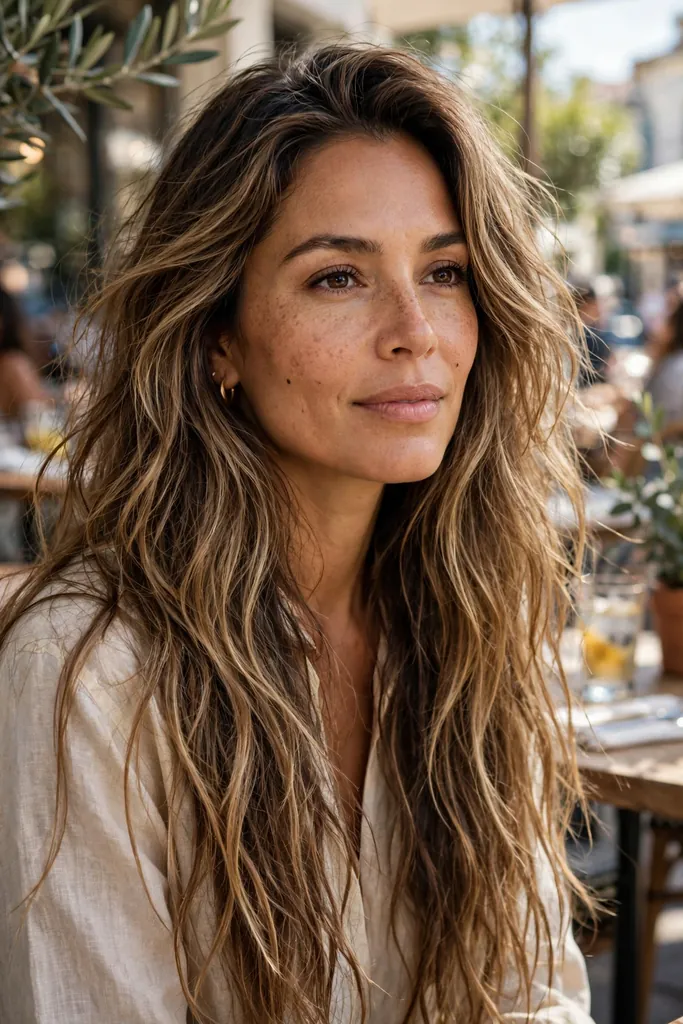
Textured beach layers are cut with plenty of internal movement so hair looks windswept and full even when you do almost nothing to it. The layers enhance natural texture and make highlights look more dimensional. This is the lowest-maintenance long-layer style: wash, scrunch in sea-salt spray or texture cream, and let it air dry. Ask your stylist for lived-in layers with point-cut ends for that undone edge. It suits wavy hair especially well, and second-day hair usually looks better than fresh.
Layered Flip Ends
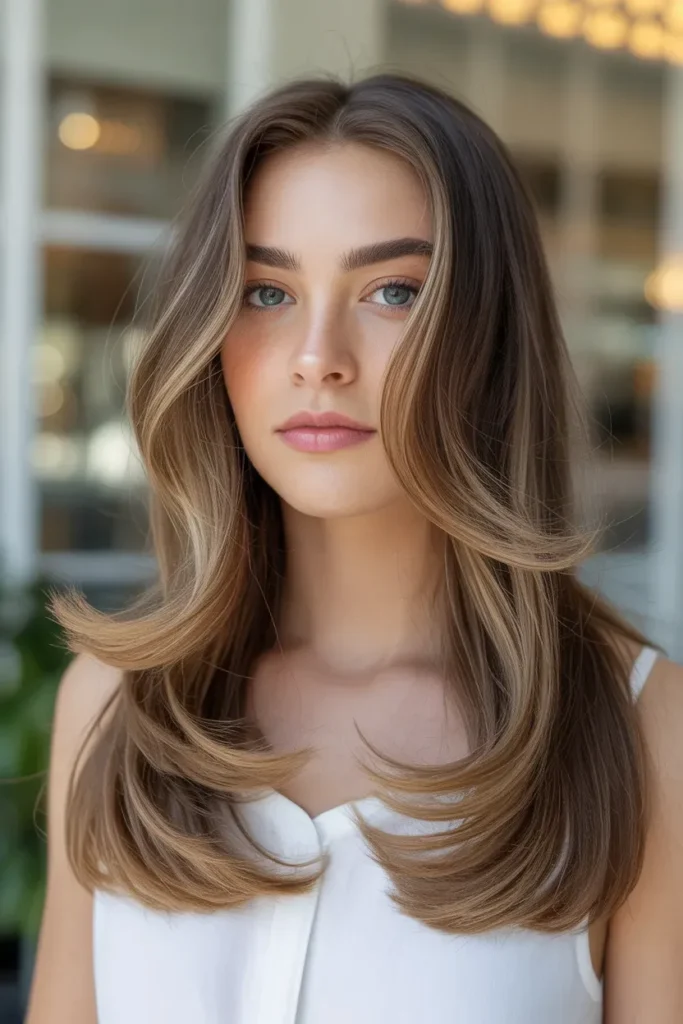
Layered flip ends turn the bottom of your hair outward into a retro flick that adds bounce and personality. The flip works because the layers are cut slightly shorter toward the face, so the ends kick out naturally when blow-dried. Ask your stylist for beveled layers through the ends. On damp hair, use a round brush and roll the last two inches outward, then set the shape with a cool shot from the dryer.
Quick Win: Flip only the two front sections for a subtle nod to the trend while keeping the back sleek — it takes two extra minutes.
Shaggy Long Layers
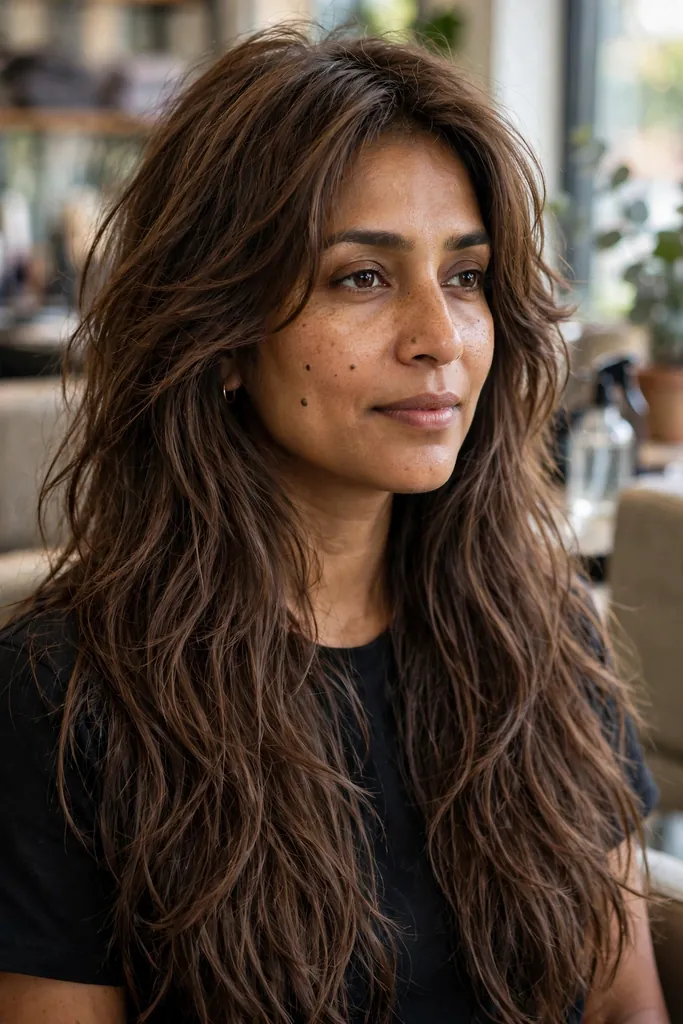
The long shag stretches the retro cut’s choppy texture over long hair, giving volume at the crown and piecey movement through the lengths. It suits thick or coarse hair that needs weight removed, and it looks best slightly messy rather than polished. Ask your stylist for heavy layering from the crown down with razored or point-cut ends. Style with a dab of texture paste on dry hair, scrunching upward. The cut thrives on air drying and grows out into an easy, lived-in shape.
U-Cut Long Layers
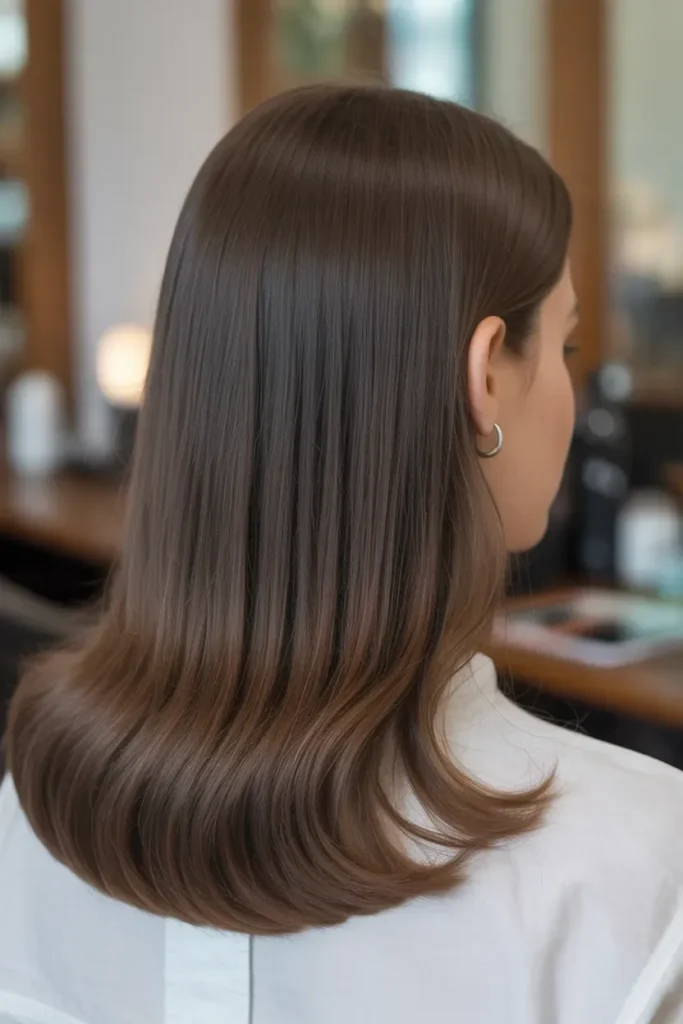
The U-cut shapes the bottom edge of long hair into a rounded U, shorter at the sides and longest in the middle. It reads as one thick, healthy curtain of hair from behind while still giving movement from the front layers. Ask your stylist for a softly rounded perimeter with long face-framing layers up front. It flatters most hair types, especially fine hair that can look stringy in a V-cut.
Quick Win: Check the U shape yourself — pull the hair forward over both shoulders in a mirror; the curve should sit evenly on both sides.
V-Cut Long Layers
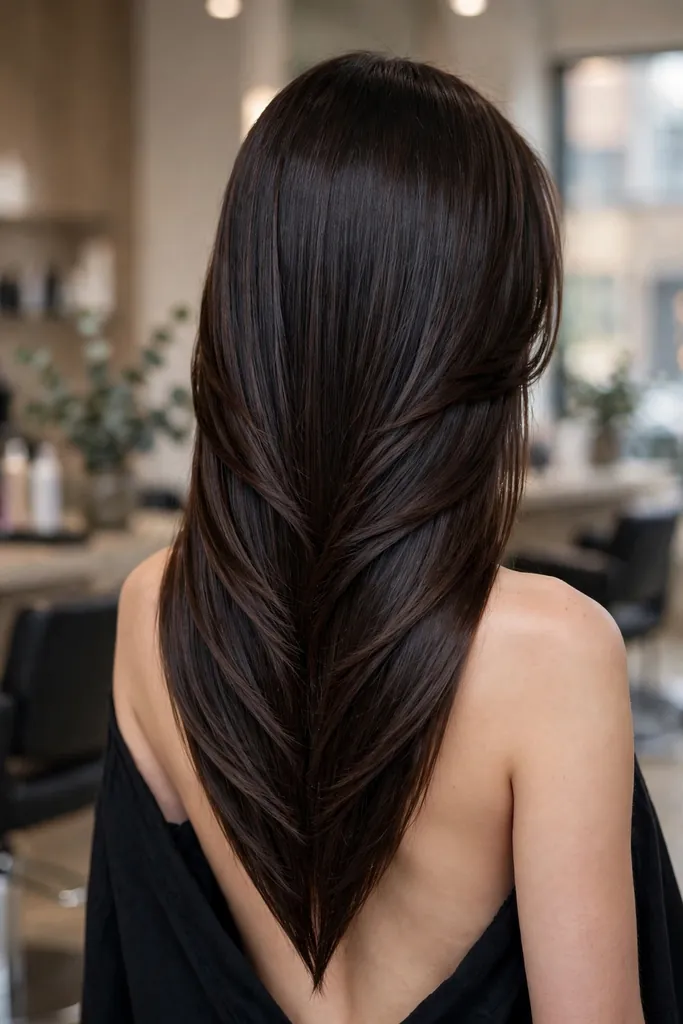
The V-cut layers hair into a dramatic point at the back, longest in the center and rising sharply at the sides. It shows off length and looks striking from behind, especially on thick, straight hair that holds the shape. Ask your stylist for a deep V with the point ending where you want maximum length, layered up the sides for blending. Because the sides are shorter, updos and braids show more dimension. It needs trims every eight weeks or the point loses its edge.
Layered Blowout Finish
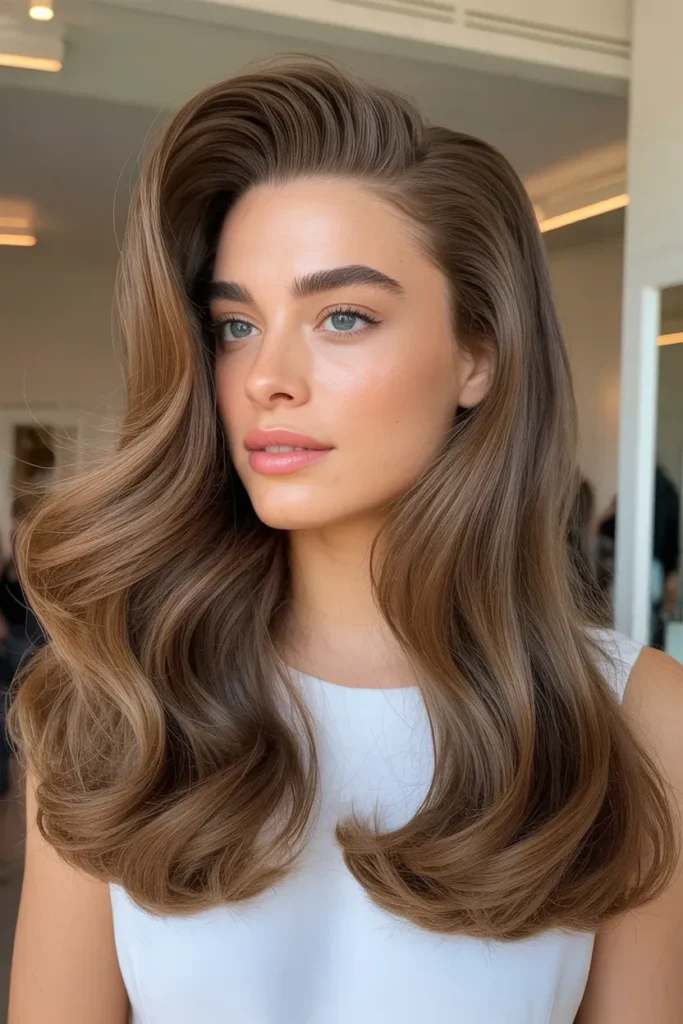
The layered blowout is the salon look everyone saves to their phone: big, bouncy volume with layers that flip and curve. Long layers are what make it work — each length catches the air differently, creating that full, rounded shape. Ask your stylist for long layers with face-framing pieces, then learn the at-home version: section damp hair, use a large round brush with a concentrator nozzle, and finish with velcro rollers at the crown while you do your makeup.
Quick Win: Sleep in the velcro rollers overnight on dry hair — you get morning volume with zero morning effort.
Long Layers With Highlights
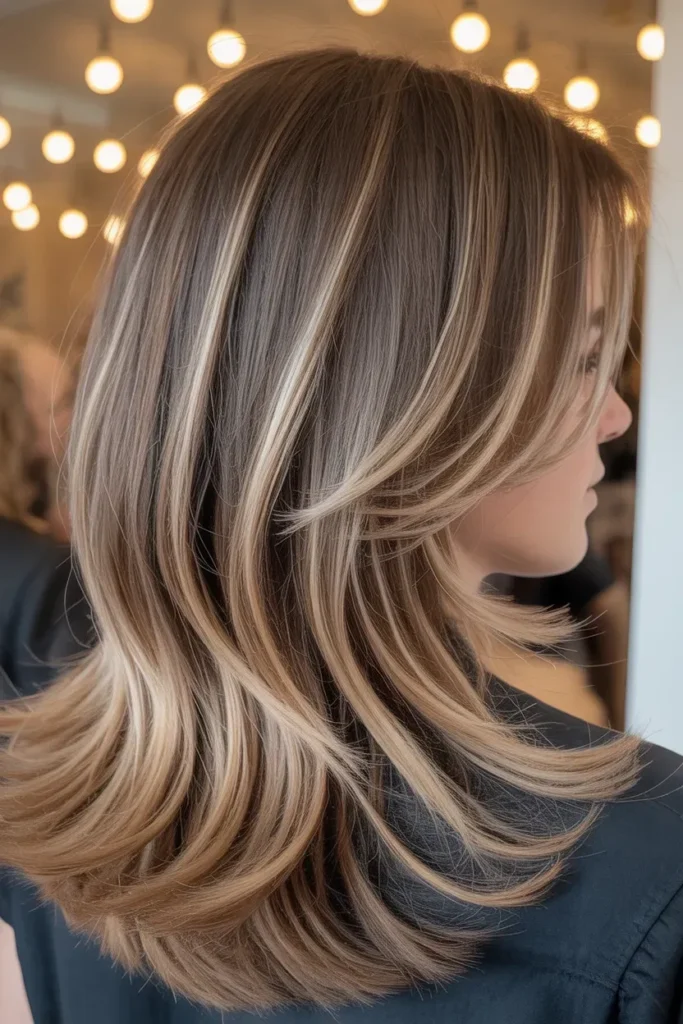
Layers and highlights amplify each other: every layer becomes a shelf that catches the color and shows off dimension. Face-framing highlights or balayage through long layers create movement even in a simple ponytail. Discuss placement with your colorist before the cut, since the layers decide where the brightness lands. Maintenance depends on the technique — balayage stretches to three or four months between appointments, while foils need touch-ups sooner. Use a color-safe shampoo and a weekly mask to keep the dimension glossy.
Wispy End Layers
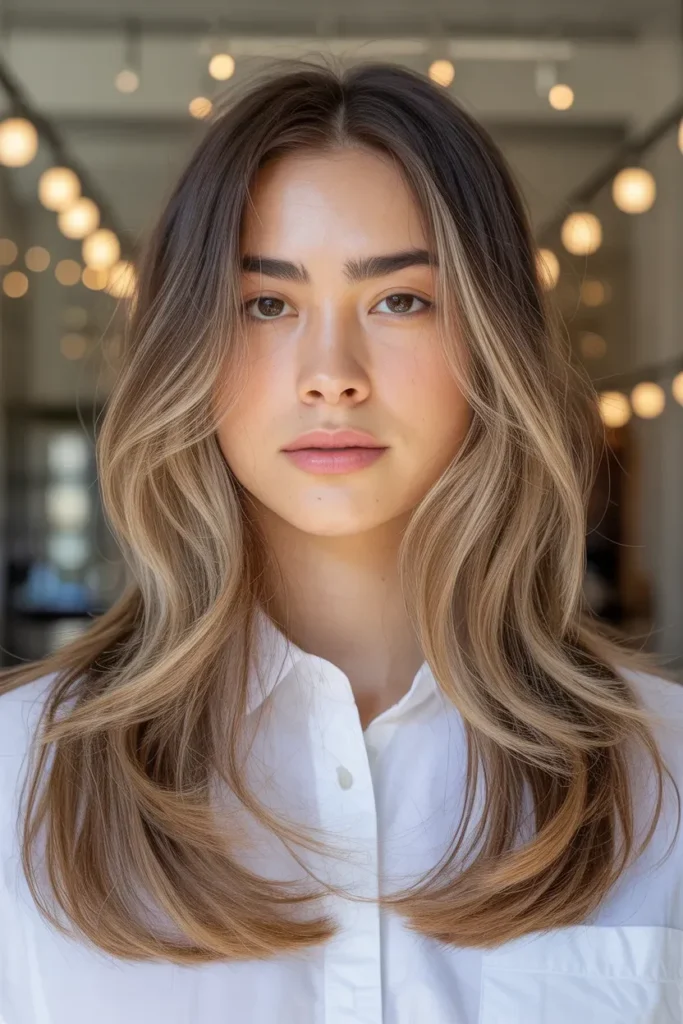
Wispy end layers feather out the last few inches so long hair feels weightless and delicate rather than heavy. The effect is subtle — the cut looks nearly one-length until the hair moves and the ends separate softly. It suits fine to medium hair that cannot handle aggressive layering. Ask your stylist for barely-there layers with razor-thinned ends. Style straight or with a loose wave; the wisps do the work on their own.
Quick Win: A tiny drop of lightweight oil only on the ends keeps wisps from looking frizzy without weighing them down.
Minimal Invisible Layers
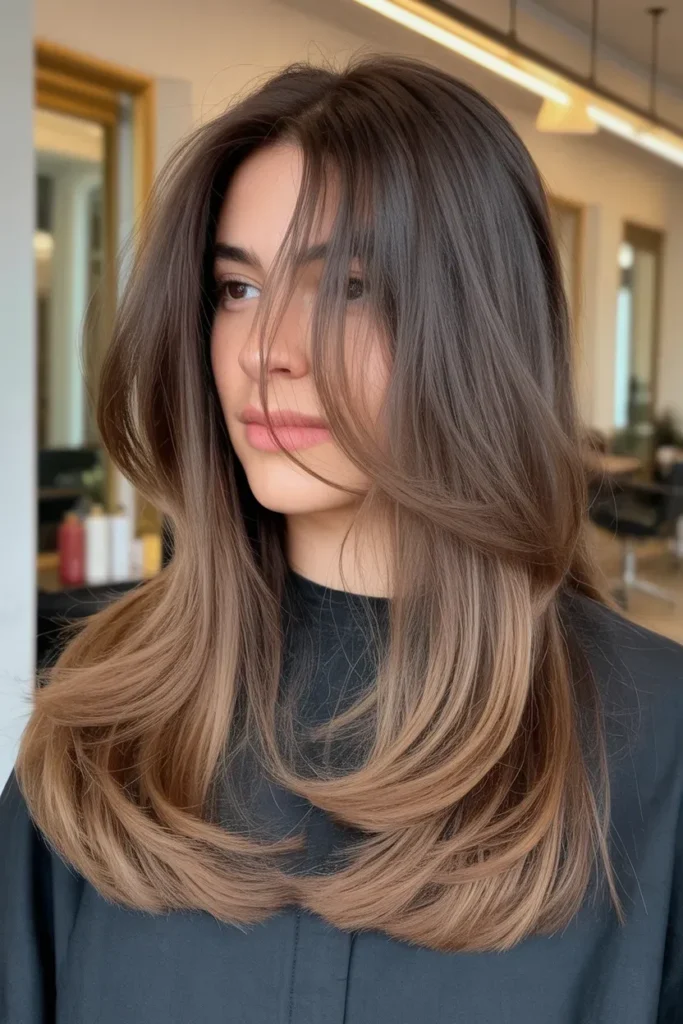
Invisible layers are cut inside the hair so the outside looks like one smooth, solid length — but the interior movement keeps it from hanging flat. This is the cut for people who want to keep maximum length and a blunt-looking edge while secretly getting body and swing. It works on straight to wavy hair and is nearly undetectable, which makes it office-friendly and timeless. Ask your stylist for internal long layers with the perimeter left untouched. Style as usual; the layers simply make everything look fuller.
Find Your Layered Look
The right long layer hairstyle comes down to your hair’s texture, how much styling time you have, and how bold you want the change to feel. Save your favorite ideas from this list and bring the photos to your appointment — a picture communicates faster than any technical description. With the right cut and a few minutes of styling, long hair stops feeling heavy and starts feeling like the best version of itself.
Frequently Asked Questions
How do I ask my stylist for long layers?
Bring two or three reference photos and point to exactly where you want the shortest layer to start — chin, collarbone, or chest. Say whether you want the layers blended and soft or choppy and visible, and mention your daily styling routine. A good stylist will adjust the technique to your hair’s thickness and texture.
Do long layers work on fine hair?
Yes, but the layering should stay minimal and concentrated near the ends. Too many layers can make fine hair look thinner, so ask for long, barely-there layers or invisible internal layers instead. A U-cut perimeter also helps fine hair look thicker from behind.
How often should layered hair be trimmed?
Most layered cuts need a trim every eight to twelve weeks to keep their shape. Blunt perimeters and V-cuts lose their edge faster and sit closer to eight weeks, while soft, lived-in layers can stretch to twelve. Regular trims also prevent split ends from traveling up the layers.
Will layers make my hair look thinner?
Aggressive layering can remove too much weight from fine hair, but long, well-blended layers usually make hair look fuller because they add movement and shape. Tell your stylist you want to keep density, and ask them to keep the layers long and the ends solid rather than heavily thinned.
What is the difference between a U-cut and a V-cut?
A U-cut rounds the bottom edge so hair is longest in the center with a soft curve, which looks thick and full from behind. A V-cut tapers to a sharp point at the center back, which shows off dramatic length but thins out the sides. U-cuts flatter fine hair; V-cuts suit thick hair best.